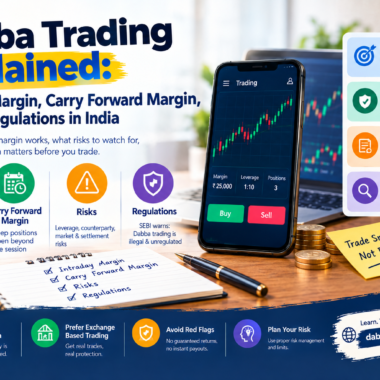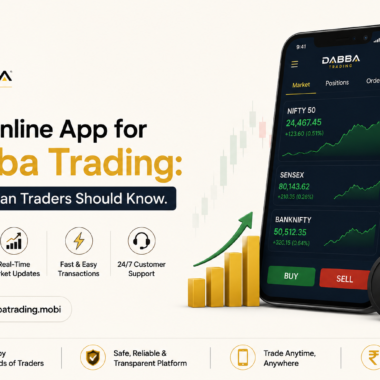
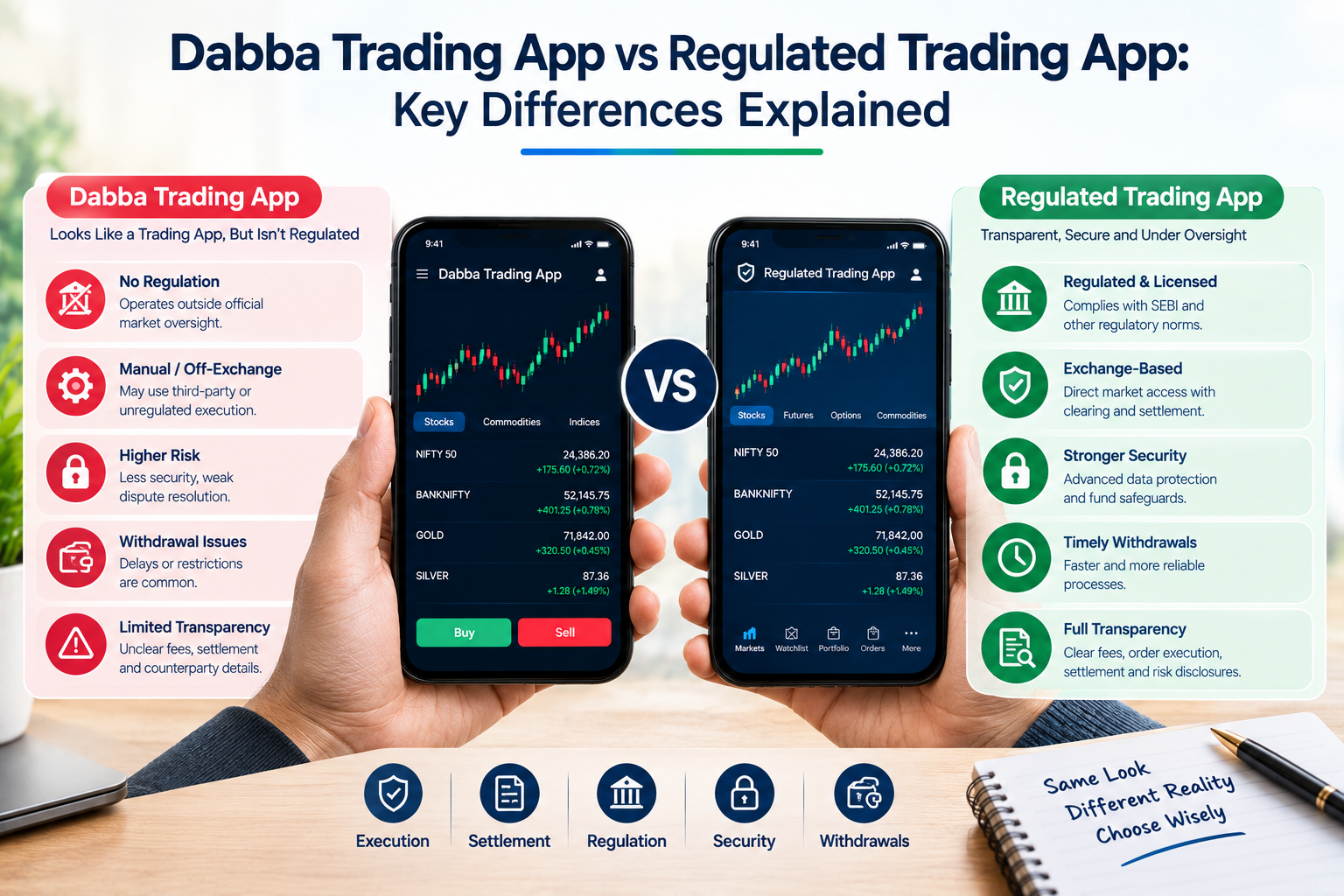
Mobile applications have made market information easier to access, but an attractive interface does not tell a user how the underlying trading service operates. Two apps may display nearly identical charts, prices and order buttons while providing very different levels of transparency and protection. Anyone comparing a Dabba Trading App with a regulated application should therefore look beyond design and examine execution, settlement, regulation, security and withdrawals.
Why app design is not enough
A modern financial application may offer watchlists, charts, alerts, order tickets and portfolio screens. These functions can make trading convenient, but convenience is only one part of the evaluation. A user should first establish who operates the account and what legal framework governs the service.
A polished dashboard should never be treated as proof of authorization. Before depositing money, verify the operator independently and read the account terms rather than relying on screenshots, reviews or promotional claims.
How a regulated trading app generally works A regulated trading application normally connects the customer to an authorized intermediary and recognized market infrastructure. Orders are recorded, confirmations are produced and applicable rules govern the relevant stages of execution and settlement. Account statements and transaction histories provide a formal record of activity. Regulation does not prevent losses. A stock can fall, a derivative can move sharply and an order can execute at a price different from expectations. Its importance lies
What a dabba-style app may do differently The term dabba trading is generally associated with arrangements in which customer positions
Order execution is a key test
When comparing applications, ask what happens after an order is submitted. Does it enter a recognized market? Is there an independently verifiable execution record? Can the user see the order number, time and execution details? How is the transaction settled?
These questions help distinguish genuine market access from an internal position-recording system. A service that cannot clearly explain the order journey deserves careful scrutiny before money is transferred.
Margin and leverage
Both conventional and informal trading services may promote margin. Margin can allow a trader to control a position larger than the cash immediately committed, but it also magnifies the effect of adverse price movements. High leverage therefore increases financial risk rather than reducing it.
Users should understand initial and maintenance requirements, potential margin calls, forced square-off rules and the monetary effect of a small market move. The highest advertised exposure should not be treated as the ideal exposure.
Statements and transaction records
Record keeping is another important difference. A regulated environment normally provides structured statements and transaction histories connected to the formal account infrastructure. These records can help the customer reconcile activity and understand charges.
With a private arrangement, the user may depend heavily on the operator’s own database or dashboard. It is sensible to retain independent copies of deposits, withdrawals, orders and account statements regardless of the service used.
Withdrawals and counterparty risk
A trading service should explain how money is withdrawn before a customer deposits funds. Check the name of the receiving entity, verification requirements, expected processing steps and applicable conditions. Avoid arrangements where payment instructions are unclear or funds must be sent to unrelated personal accounts.
Counterparty risk becomes particularly important when transactions are settled privately. Even if an account screen shows a profit, the customer still needs a reliable mechanism for receiving the money.
Security on mobile devices
A trading application handles valuable account information, so device and login security matter. Users should enable strong authentication, keep the operating system updated and avoid sharing passwords or one-time codes. Unknown requests for remote screen access are another warning sign.
Security should also include careful review of app permissions and notifications. A secure login cannot compensate for an unclear legal or financial structure, but good security practices reduce the chance of unauthorized account access.
How to compare the two types of app
Create a checklist covering operator identity, regulatory status, execution route, settlement, margin rules, fees, statements, withdrawals, security and complaints. Compare evidence rather than marketing language. If one service offers more features but cannot explain its legal or operational structure, the extra features should not determine the decision.
Anyone researching dabba trading in india should verify the current regulatory position and understand exactly how the service handles customer orders. Similarly, a dabba trading platform should not be judged simply by the presence of a mobile application.
Common marketing traps
Claims about guaranteed returns, effortless profits or extremely high leverage deserve caution. Testimonials can describe individual experiences but cannot establish the safety or legality of a service. A limited-time deposit offer can also create unnecessary pressure.
A careful customer should be comfortable taking time to verify information. If a provider discourages questions about regulation, settlement or withdrawals, that behavior is itself relevant when assessing risk.
Making a responsible choice
The purpose of a trading app is to make market participation easier, not to remove uncertainty. Before placing a trade, users should understand the instrument, define an acceptable loss and decide how much capital can reasonably be exposed. Leveraged positions deserve additional caution because losses can accumulate quickly.
Learning the normal regulated process also makes comparison easier. Once a user understands how orders, clearing, settlement and statements normally work, unusual arrangements become easier to identify.
Final perspective
A mobile screen is only the visible layer of a financial service. The more important questions concern the legal entity behind the application, where trades are executed, how they are recorded and settled, and what happens when a customer wants to withdraw funds. These issues should be resolved before convenience becomes the deciding factor.
When considering dabba trading app services, remember that an app’s appearance does not establish regulatory protection. A careful review of the complete transaction structure can help users avoid confusing digital convenience with legitimate market infrastructure.
Before using a service, Research Dabba Trading Platform carefully and verify its operator, transaction process and withdrawal terms.