A search for trading applications can bring up many different types of services. Some connect users with regulated financial markets, while others may offer market-linked positions through informal arrangements. The term “Dabba Trading App” is generally associated with applications or digital interfaces used to facilitate dabba trading, where transactions are recorded outside the recognized exchange system.
Understanding how these platforms work is important because an attractive mobile interface can make an informal arrangement look similar to a conventional brokerage application. The technology may be modern, but the underlying transaction structure is what matters.
What Is a Dabba Trading App?
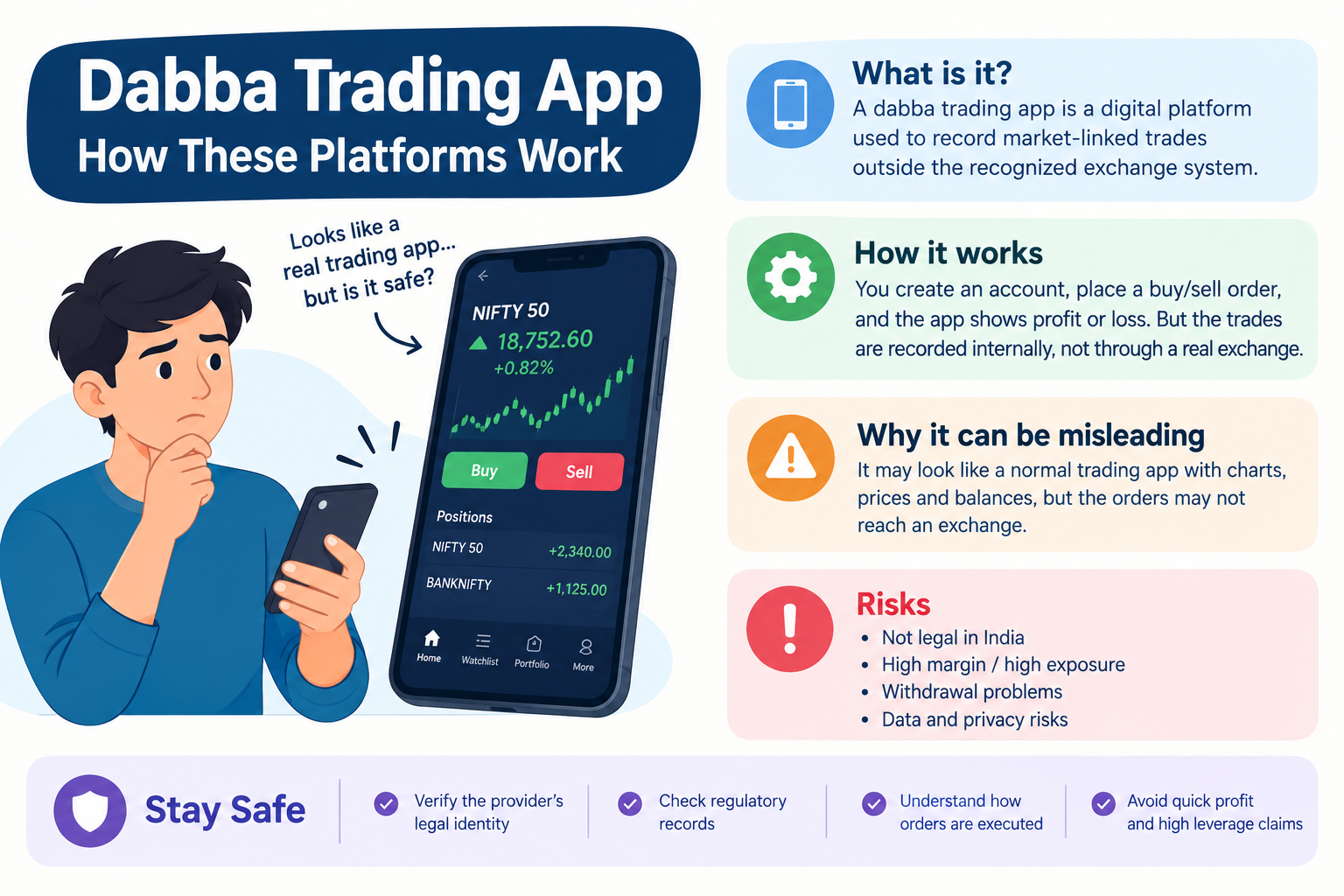
A dabba trading app can be understood as a digital interface used by an operator to accept and record market-linked trading instructions outside the recognized exchange and settlement framework.
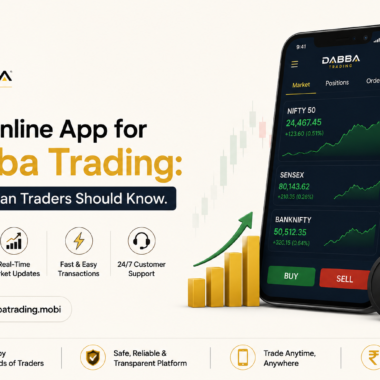
The app may display prices that correspond to public market prices. A user can potentially select an instrument, enter a quantity, and see a profit or loss figure as the referenced market moves.
However, the key distinction is that the transaction may be recorded internally rather than being executed as a genuine exchange transaction through an authorized intermediary.
How the Platform Can Work
The process often begins with account creation through the operator. The user may receive login credentials and access to a dashboard showing market prices, balances, positions, or other information.
A buy or sell instruction is then entered into the interface. Instead of being routed through a recognized exchange, the instruction may be recorded in the operator’s own system.
When the reference price changes, the system calculates the difference between the opening and current or closing price. The operator then uses that calculation to determine the user’s stated profit or loss.
This structure means the user is dealing with the operator rather than participating directly in the normal exchange execution and settlement process.
Why the Interface Can Be Misleading
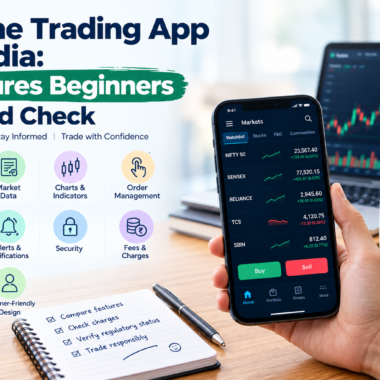
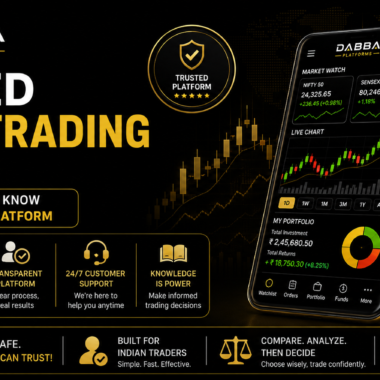
Modern software can include charts, watchlists, margin displays, order buttons, and position screens. These features are also common in legitimate brokerage applications.
The presence of such features does not prove that orders are reaching an exchange. A user should investigate the legal identity of the provider, the intermediary involved, and the actual execution and settlement process.
The Difference From a Regulated Trading App
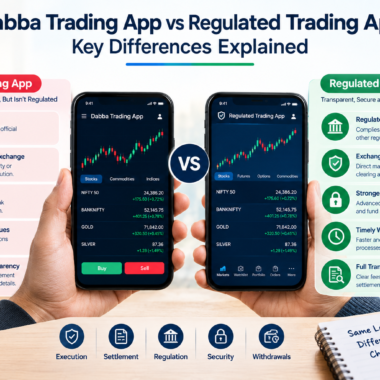
A regulated trading application generally connects a customer’s account to an authorized intermediary and applicable exchange, clearing, settlement, and depository systems.
Orders have defined statuses and transaction records. Customers receive statements and have access to established complaint mechanisms.
In an informal dabba arrangement, the operator can maintain its own internal ledger and act as the counterparty. The customer may not receive the same protections associated with regulated market participation.
Margin and High Exposure
Dabba operators may promote high margin or large exposure as an attraction. In simple terms, this means a customer can take a position much larger than the cash initially provided.
High leverage increases sensitivity to market movements. A relatively small change in the reference price can create a substantial gain or loss compared with the amount deposited.
Users should therefore be careful with claims that a platform offers hundreds of times exposure or exceptionally low capital requirements.
Legal and Financial Risks
Dabba trading is prohibited in India. Investor-education material from Indian securities authorities has warned the public about such unauthorized trading arrangements.
There are also practical risks. Because the operator controls the internal record, customers may have limited ability to independently verify the trade. If a dispute occurs, the customer may face difficulty proving the terms or obtaining settlement.
Withdrawal problems can be another concern. A user may see a balance on a dashboard but still depend on the operator to actually release funds.
Security and Privacy
Digital platforms can collect names, phone numbers, identity documents, payment information, and login details. Users should be cautious about providing sensitive information to services whose regulatory and corporate identity has not been verified.
Security concerns also apply to passwords and authentication codes. Users should never disclose such credentials to someone contacting them through unofficial channels.
Warning Signs to Watch
A user should be cautious when an app promises guaranteed profits, fixed daily income, unusually high leverage, or risk-free trading.
Other warning signs include pressure to deposit immediately, unclear ownership, personal-bank-account payment requests, lack of verifiable registration, and unexplained withdrawal restrictions.
These indicators warrant verification rather than automatic assumptions about the service.
Safer Verification Steps
Before using any trading application, identify the legal entity operating it. Check official regulatory records where relevant. Understand where orders are executed and how securities or contracts are settled.
Read the complete fee schedule and terms. Avoid relying on screenshots, testimonials, or social-media claims as proof of legitimacy.
Conclusion
A dabba trading app may look similar to a normal trading application because it can display prices, charts, positions, and profit or loss figures. The critical difference is how the underlying transaction is executed and settled.
Dabba trading is prohibited in India, and users should understand the legal and counterparty risks associated with informal trading arrangements. A professional interface is not a substitute for regulatory verification. Before transferring funds to any trading service, verify the provider and understand exactly what happens to an order after it is submitted.
Another practical point is that users should not confuse a market-linked display with actual ownership of securities. A dashboard may show a stock symbol, live-looking price, quantity, margin, and profit figure, yet those numbers can simply be entries maintained by the operator. In regulated investing, the relationship between the customer, intermediary, exchange, clearing system, and depository is documented through established processes. Understanding this difference can help beginners ask the right questions before trusting an unfamiliar app. It is also sensible to keep copies of official account documents and avoid transferring money until the provider’s identity and authorization have been independently verified.
A dabba trading app may display prices, charts, positions, and balances in a way that resembles a conventional brokerage application. However, the phrase dabba trading refers to an informal arrangement outside the recognized exchange framework, so the underlying execution and settlement process must be verified carefully.