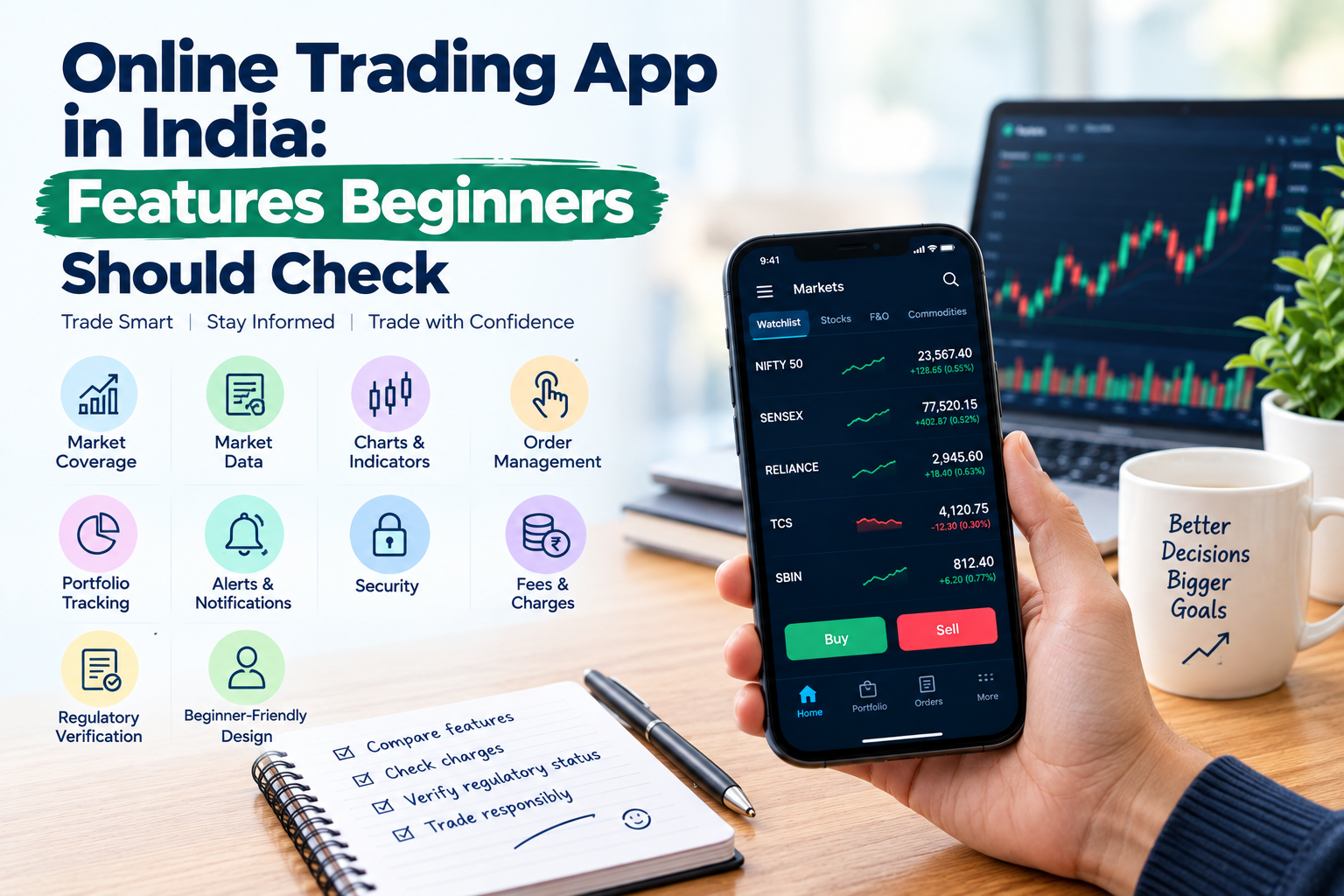
An Online Trading App can give users convenient access to market information and electronic order tools. For beginners in India, however, selecting an app should involve more than comparing screenshots or promotional claims. Users should examine functionality, costs, security and the regulatory status of the intermediary.
Market Coverage
The first feature to check is the market coverage offered by the app. Some services focus on equities, while others may provide access to derivatives or other permitted products.
Beginners should understand the product before trading it. Different products can have very different levels of risk.
Market Data
A useful app should display relevant market information clearly. Depending on the service, this can include prices, volume, charts, order status and portfolio data.
Users should check whether data is real-time, delayed or subject to additional charges.
Charts and Indicators
Charts help traders visualise price behaviour. Many apps offer technical indicators such as moving averages, momentum measures and volatility tools.
Beginners should avoid assuming that more indicators automatically mean better analysis. Learning what each indicator measures is more important.
Order Management
The app should make order entry and order status easy to understand. Common order types may include market, limit and stop-loss orders, subject to the market and broker’s available features.
Before using an order type with real money, beginners should understand how execution works and what can happen during rapid price movements.
Portfolio Tracking
Clear portfolio and position screens are useful. Users should be able to review holdings, open positions, average prices, realised and unrealised profit or loss, and transaction history.
Alerts and Notifications
Price alerts, order notifications and account alerts can help users stay informed. They are particularly useful when the user is not continuously watching the market.
However, an alert is only information. It should not be treated as a guarantee that a particular action will produce a profit.
Security
Security should be a major consideration for any financial app. Users should use strong passwords, protect their devices and enable multi-factor authentication where available.
Never share login credentials or one-time passwords with another person.
Fees and Charges
Users should review brokerage, exchange-related charges, taxes, account fees and other applicable costs. Frequent trading can make small charges more significant over time.
Regulatory Verification
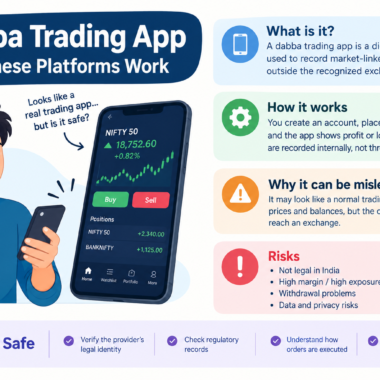
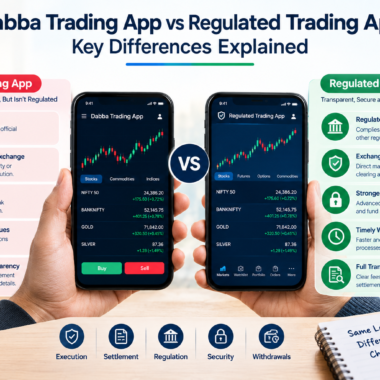
A professional interface is not evidence of regulatory authorisation. Indian users should verify the intermediary and understand how and where trades are executed.
SEBI advises investors not to deal with unregistered intermediaries and states that dabba trading is illegal and unregulated. citeturn0search5turn0search0
Beginner-Friendly Design
An app should make important information easy to understand. Clear menus, readable charts, simple order screens and accessible help resources can reduce avoidable confusion.
Conclusion
When evaluating an Online Trading App in India, beginners should check market coverage, data quality, charts, order tools, portfolio tracking, alerts, security, charges and regulatory status.
The goal should be to understand the service before using it with real money. A convenient app can simplify access to markets, but responsible trading still requires knowledge, risk awareness and careful verification.